Introduction
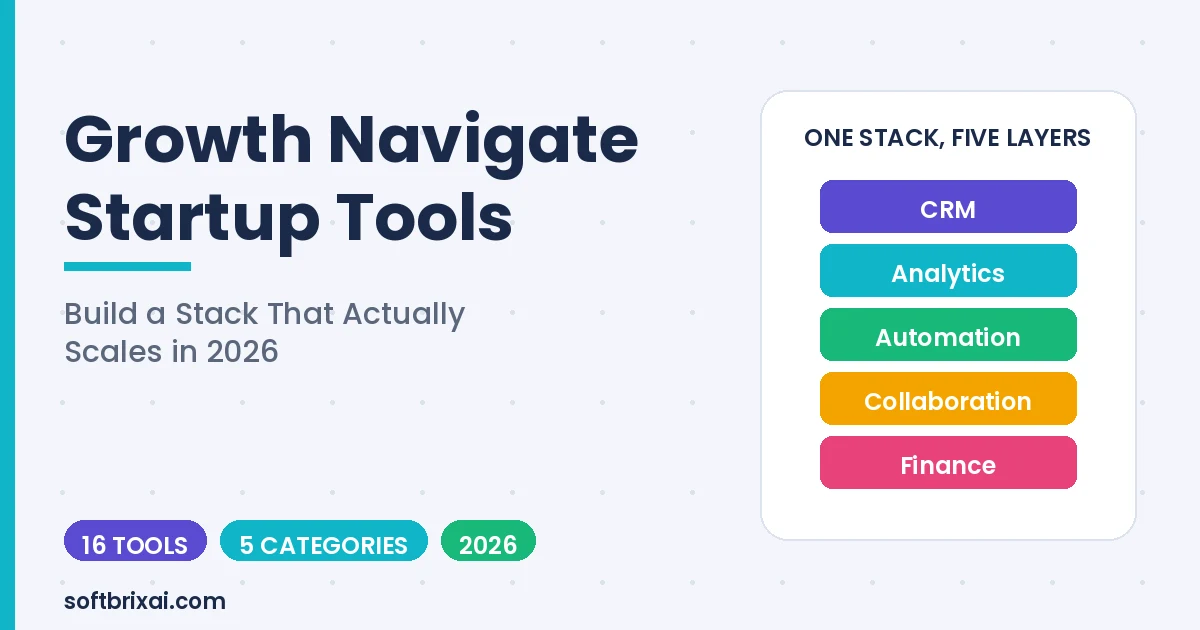
Growth navigate startup tools are the software platforms that help early-stage companies turn limited resources into repeatable growth. These tools cover customer relationship management (CRM), analytics, automation, collaboration, finance, and market intelligence. The goal is not to buy every popular app. The goal is to build a connected, affordable stack that removes friction and supports decisions with real data.
Most startup tool guides list products without explaining when to add them. This guide takes a different approach. It covers what these tools are, the criteria that matter when choosing tools, a comparison of 16 platforms, and a stage-by-stage plan for building your stack. You will also find the mistakes that quietly drain software budgets and a clear method for measuring return on investment (ROI).
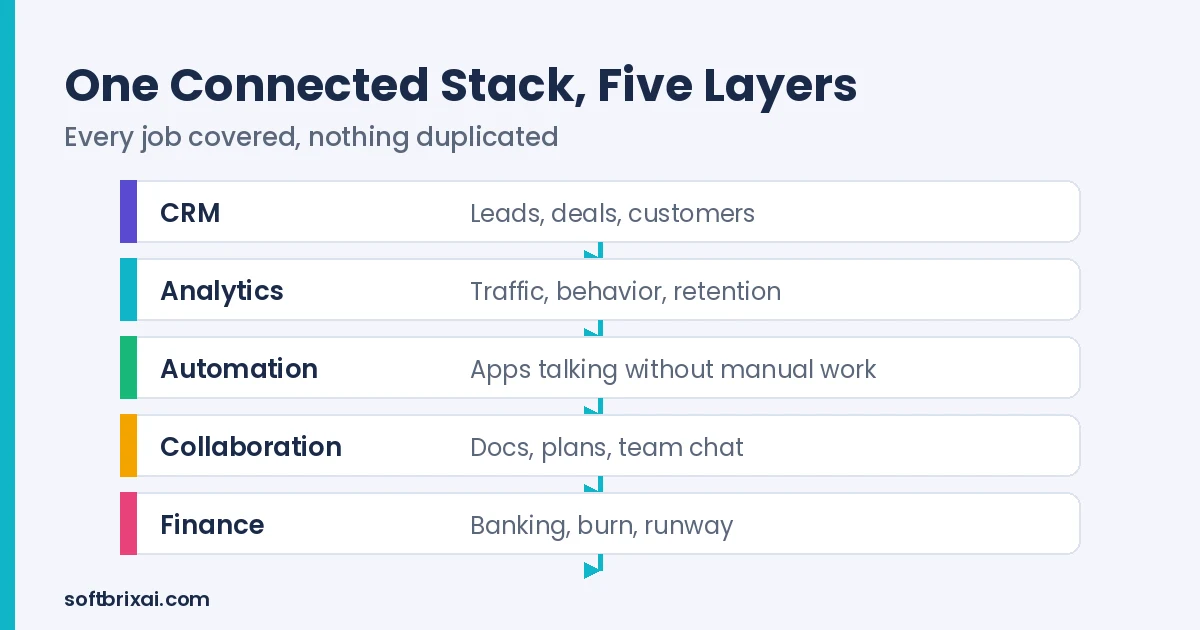
The main benefits of growth navigate startup tools include faster customer acquisition, cleaner data for decision-making, and fewer manual tasks across the team. Main uses span sales pipeline management, product analytics, marketing automation, workflow automation, financial tracking, and competitive research. Main components include a CRM, an analytics platform, an automation layer, a collaboration workspace, and finance infrastructure.
This guide helps founders choose tools by stage, connect them properly, and cut what no longer earns its place.
Key Takeaways
- Growth navigate startup tools work best as a connected system, not a collection of separate apps.
- Match each tool to a real bottleneck before you buy it.
- Start with free tiers and upgrade only when you hit a genuine limit.
- Integration compatibility matters more than feature count.
- Review your stack every quarter and remove tools that no longer serve a purpose.
- Track customer acquisition cost (CAC), lifetime value (LTV), burn rate, runway, and monthly recurring revenue (MRR) from day one.
What Are Growth Navigate Startup Tools?
Growth navigate startup tools are cloud-based software platforms that early-stage companies use to manage and accelerate growth. They handle customer acquisition, sales tracking, team collaboration, analytics, automation, and financial planning. These tools replace spreadsheets, manual tracking, and scattered email threads with systems that collect live data and automate repetitive work.
A startup faces constraints that larger companies do not. Budgets are tight. Teams are small, so a few people must cover the work of entire departments. The right tools let a five-person team operate with the speed and visibility of a much larger organization. Cloud-based solutions now dominate startup software deployments, as founders move away from manual tracking.
What “Growth Navigate” Actually Means
“Growth navigate” refers to the practice of steering a startup through each stage of development with the right tools and data at each point. It combines growth strategy with operational navigation. Founders who practice growth navigation assess their current stage, identify the biggest bottleneck, and add tools that solve that specific problem. They do not buy software based on what larger companies use or what looks impressive in a demo.
Growth navigation requires three habits. First, diagnose the bottleneck before shopping for tools. Second, add one tool per problem and test it before paying. Third, review the stack regularly and cut what no longer earns its place. These habits separate founders who scale efficiently from those who accumulate subscriptions they never fully use.
The concept applies to every stage. A pre-product-market-fit startup navigates differently than a Series A company. The tools change, but the discipline stays the same: solve the real problem, measure the result, and move forward.
Why the Right Stack Matters More Than the Right Single Tool
A single tool rarely solves a startup’s growth problem. Growth depends on how well your systems connect. A CRM that cannot talk to your email platform creates manual work. An analytics tool that does not integrate with your marketing stack leaves gaps in your data. The value comes from the connections between tools, not from any one platform’s feature list.
Startups that build connected stacks see three advantages. They acquire customers faster because marketing and sales share the same data. They reduce internal delays because tasks and reports flow automatically. They make decisions with evidence instead of guesswork. These advantages compound as the company grows.
A disconnected stack creates the opposite effect. Data silos force manual copying. Teams lose track of tasks. Reports take hours to compile. The cost is not just software fees but lost time and missed opportunities. Building a connected stack from the start prevents these problems.
How to Choose Growth Navigate Startup Tools
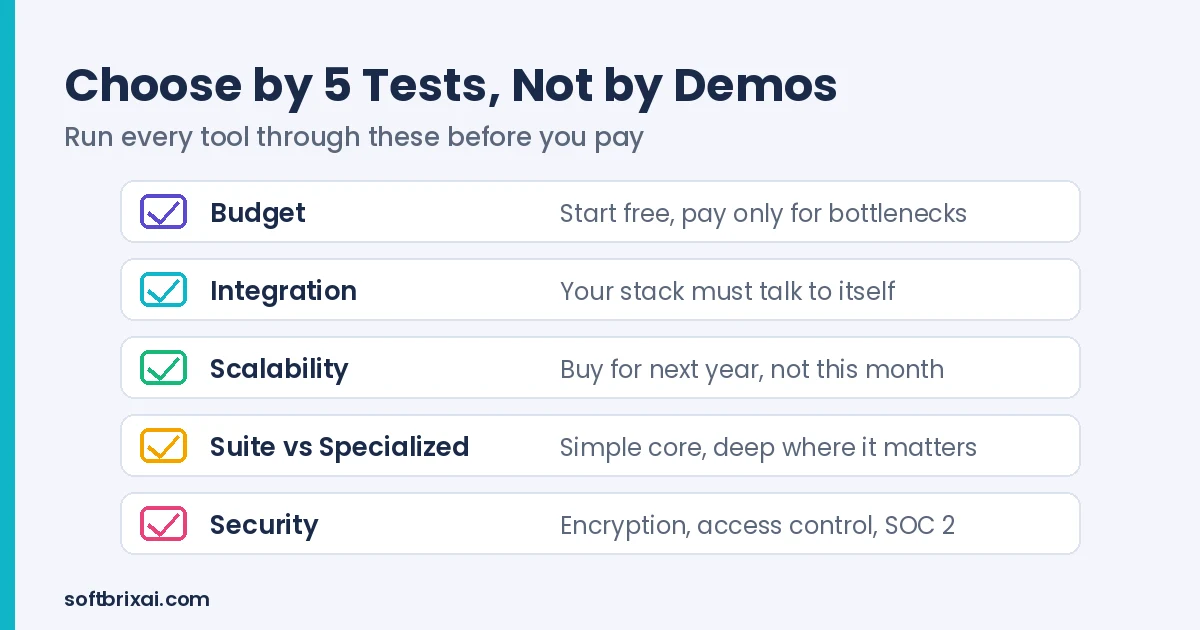
Choosing the right tools requires evaluating five factors: budget, integration, scalability, suite versus specialized approach, and security. Each factor affects how well your stack performs as the company grows.
Budget: Start Free, Pay Only for Bottlenecks
Start with free tiers and upgrade only when you hit a real limit. Most leading platforms offer free plans that cover the needs of early-stage teams. HubSpot, Notion, Slack, and Google Analytics 4 (GA4) all provide free tiers that work well for startups finding their first customers.
The trap is paying for features you do not use yet. A founder who buys an enterprise CRM before proving product-market fit wastes money and adds complexity. Wait until a specific bottleneck forces the upgrade. If your free CRM cannot handle your lead volume, that is a signal to pay. If your free analytics cannot track the events you need, that is a signal to upgrade.
Software spend for early teams typically falls within 10 to 20 percent of the operating budget. Anything beyond that range deserves scrutiny. Review each subscription quarterly and ask whether it still solves a real problem.
Integration: Your Stack Should Talk to Itself
Integration compatibility determines whether your tools work as a system or as isolated apps. Before committing to any platform, check what it connects to. Native integrations are best because they require less setup and maintenance. Zapier or Make can fill gaps when native connections do not exist.
Data silos are the main cost of poor integration. When your CRM cannot sync with your email tool, someone must manually export and import data. When your analytics platform cannot pull from your marketing tools, reports miss key information. These gaps slow decisions and create errors.
Test integrations during free trials. Connect your CRM to your email platform and verify that data flows correctly. Check whether the connection breaks when you update records. A tool that integrates well with your existing stack is worth more than one with better features but no connections.
Scalability: Buy for Next Year, Not Just This Month
Scalability means the tool can handle your growth without forcing a painful migration. A platform that works for five users may break at fifty. Check pricing tiers, user limits, and feature gates before you commit.
Look for platforms that offer clear upgrade paths. HubSpot, Salesforce, and Notion all scale from small teams to larger organizations. Tools with rigid pricing or hard user caps create problems when you grow. The cost of switching platforms mid-growth often exceeds the savings from choosing a cheaper option early.
Scalability also applies to features. A CRM that handles basic contact management may lack the pipeline reporting you need at Series A. Check whether the platform offers the features you will need in 12 to 18 months, not just what you need today.
All-in-One Suite vs. Best-of-Breed Tools
All-in-one suites combine multiple functions in one platform. HubSpot offers CRM, marketing, sales, and service tools in one system. Salesforce provides CRM, analytics, and automation through its ecosystem. Suites reduce integration work because everything lives in one place.
Best-of-breed tools specialize in one function. Amplitude focuses on product analytics. Zapier focuses on workflow automation. These tools often outperform suites in their specific area.
The choice depends on your stage and team size. Early-stage startups benefit from suites because they reduce complexity and integration work. As the company grows, specialized tools may deliver better results for specific functions. Many startups use a hybrid approach: a suite for core functions and specialized tools for areas where depth matters.
Security and Data Privacy Basics
Security and data privacy protect your company and your customers. Check whether the platform offers encryption at rest and in transit, role-based access controls, and compliance with relevant regulations. General Data Protection Regulation (GDPR) compliance matters if you serve European customers. SOC 2 certification signals that the vendor follows security best practices.
Review data ownership terms before you commit. Some platforms make it difficult to export your data if you leave. Others claim rights to your data. Read the terms of service and confirm that you retain ownership.
For startups handling sensitive customer information, security is not optional. A breach damages trust and creates legal exposure. Choose platforms that treat security as a core feature, not an afterthought.
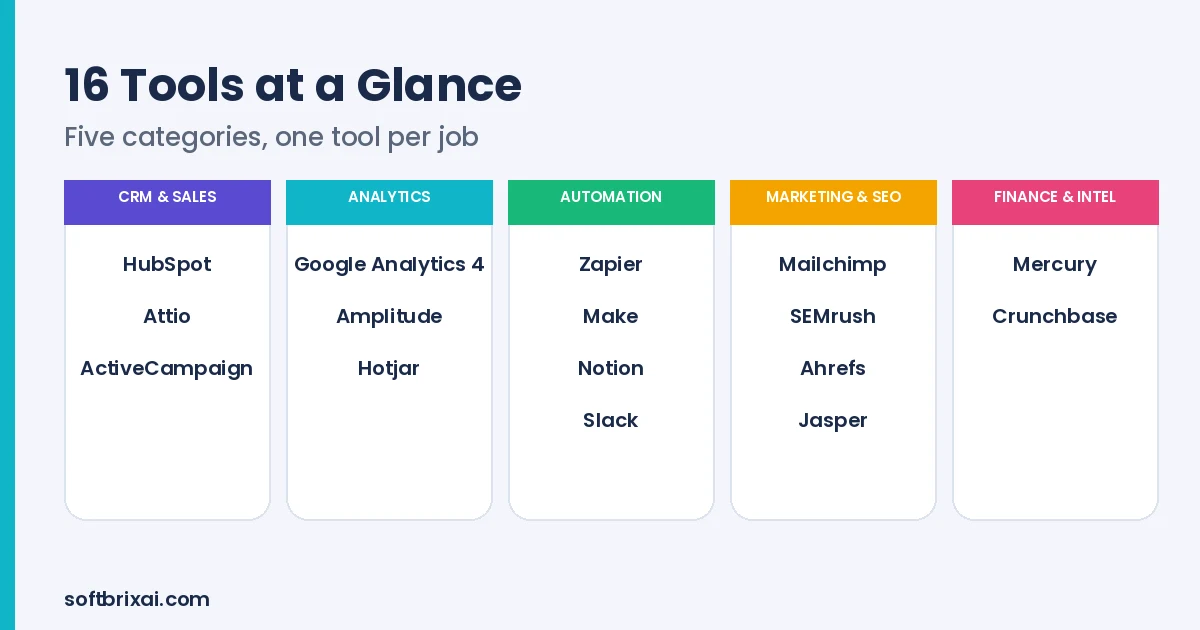
Quick Comparison Table: The 16 Tools at a Glance
| Tool | Category | Best For | Free Tier | Paid Tier Structure |
|---|---|---|---|---|
| HubSpot | CRM and Sales | Startups wanting CRM plus marketing in one place | Yes | Tiered by contacts and features |
| Attio | CRM and Sales | Data-driven teams wanting a flexible CRM | Yes | Per user per month |
| ActiveCampaign | CRM and Sales | Email-first startups needing automation | No | Tiered by contacts |
| Google Analytics 4 | Analytics | Website and user behavior tracking | Yes | Free with paid enterprise option |
| Amplitude | Analytics | Product analytics and retention | Yes | Tiered by events |
| Hotjar | Analytics | Heatmaps and user feedback | Yes | Tiered by sessions |
| Zapier | Automation | Connecting apps without code | Yes | Tiered by tasks |
| Make | Automation | Visual workflow automation | Yes | Tiered by operations |
| Notion | Collaboration | All-in-one workspace for docs and projects | Yes | Per user per month |
| Slack | Collaboration | Team communication and channels | Yes | Per user per month |
| Mailchimp | Marketing | Email campaigns and audience management | Yes | Tiered by contacts |
| SEMrush | Marketing | SEO and competitive research | Limited | Tiered by features |
| Ahrefs | Marketing | Backlink analysis and SEO | No | Tiered by features |
| Jasper | Marketing | AI content creation | No | Tiered by words |
| Mercury | Finance | Startup banking and cash management | Yes | Free with transaction fees |
| Crunchbase | Market Intelligence | Investor and competitor research | Limited | Tiered by features |
CRM and Sales Tools
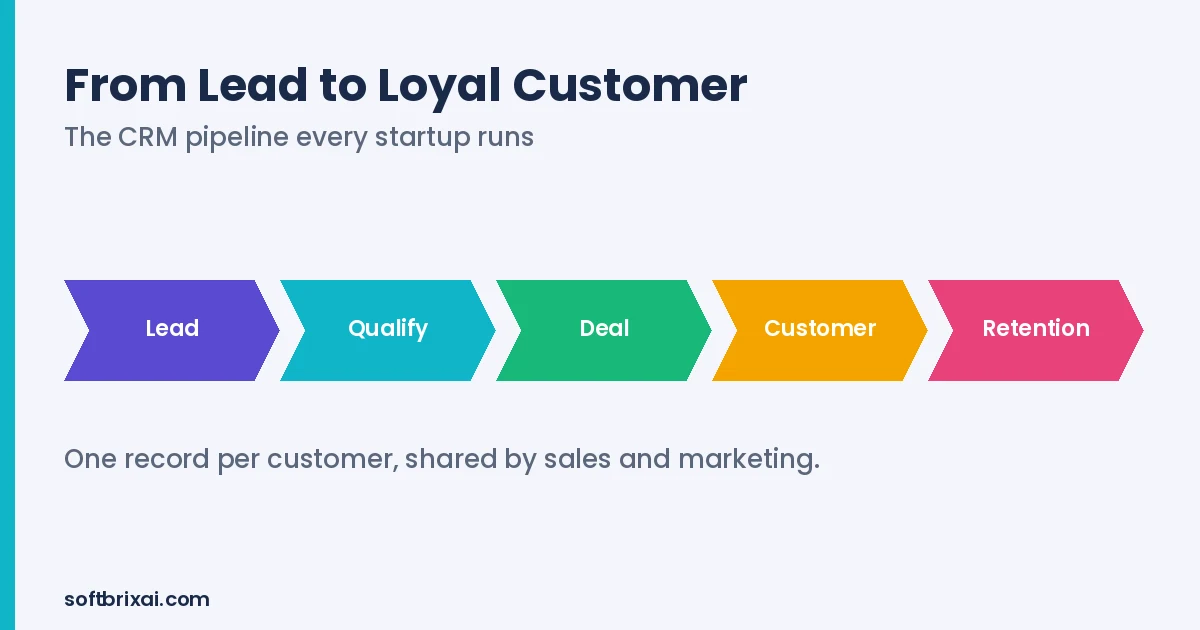
CRM and sales tools keep every lead, deal, and customer conversation in one place. They help sales and marketing stay aligned and give founders visibility into pipeline health.
HubSpot
HubSpot is a cloud-based CRM platform that combines sales, marketing, and service tools in one system. It is best for startups that want a single platform to manage customer relationships from first contact through retention. The free tier covers basic contact management, deal tracking, and email. Paid tiers add marketing automation, reporting, and advanced CRM features. HubSpot scales from small teams to larger organizations, which reduces the need to switch platforms as you grow. The main trade-off is cost: pricing rises quickly as your contact list grows. Startups with large email lists may find the paid tiers expensive compared to specialized alternatives.
Best for: founders who want CRM and marketing under one roof from day one. Watch out: the bill grows with your contact list, so clean dead contacts before every upgrade.
Attio
Attio is a data-driven CRM built for teams that want flexibility. It lets users create custom data models, automate workflows, and connect external data sources. Attio is best for startups with technical teams who want a CRM that adapts to their process rather than forcing a fixed structure. The free tier covers basic CRM functions for small teams. Paid tiers add automation, integrations, and advanced reporting. Attio works well for B2B companies with complex sales processes. The learning curve is steeper than simpler CRMs, so teams without technical resources may find it harder to set up.
Best for: technical teams that want to shape the CRM around their own sales process. Watch out: the flexibility needs setup time, so assign one owner to build and maintain the data model.
ActiveCampaign
ActiveCampaign combines email marketing with CRM and automation. It is best for startups that rely on email as a primary channel for customer acquisition and retention. The platform offers sophisticated automation builders that let you create multi-step email sequences triggered by user behavior. ActiveCampaign does not offer a free tier, but its entry-level plans are affordable for small teams. Pricing scales with contact count, so costs rise as your list grows. Startups that need both email marketing and CRM in one tool find ActiveCampaign efficient. Those who already use a separate CRM may find the overlap unnecessary.
Best for: email-led startups that live or die by automated sequences. Watch out: if you already run a separate CRM, the overlap can mean paying twice for the same contacts.
Analytics and Product Tools
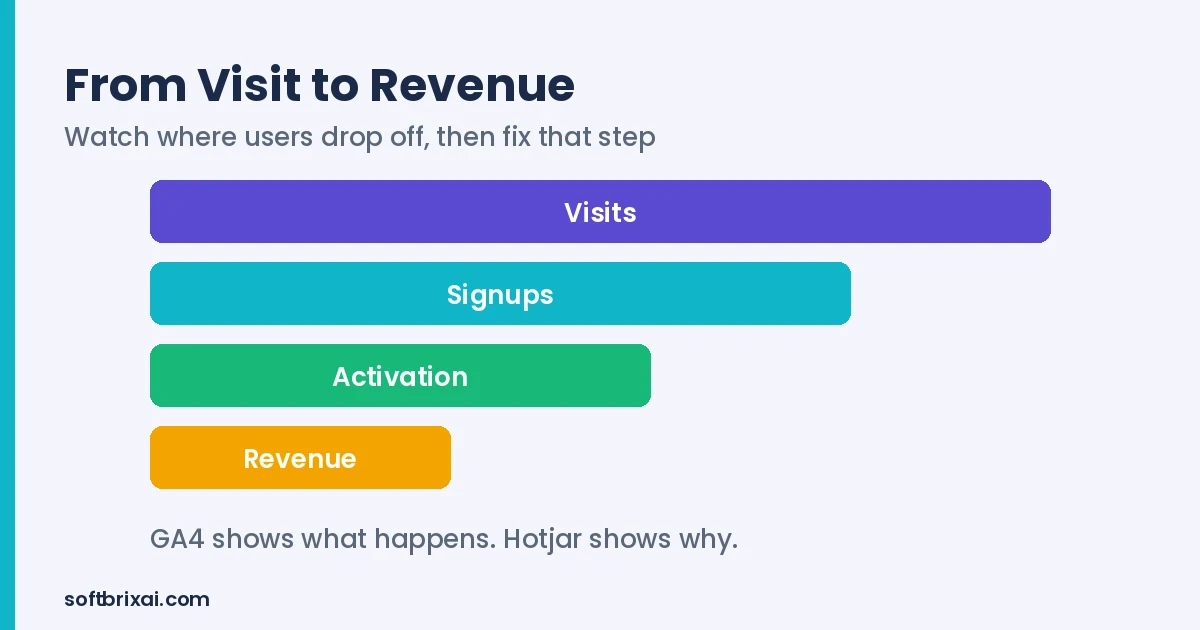
Analytics and product tools show how users behave and where they drop off. They turn raw activity into insights that guide product and marketing decisions.
Google Analytics 4 (GA4)
Google Analytics 4 (GA4) is the standard platform for tracking website and app behavior. It is best for startups that need to understand where traffic comes from, what users do on the site, and which channels drive conversions. GA4 is free for most startups, with a paid enterprise option for high-volume sites. The platform tracks events rather than sessions, which gives more flexibility for analyzing user journeys. GA4 integrates with Google Ads and other Google products. The main limitation is complexity: the interface and event model require time to learn. Startups without analytics experience may need training or outside help to set it up correctly.
Best for: any startup with a website or app that needs free, reliable traffic and behavior data. Watch out: the event-based model takes learning, so budget an afternoon to set up key events properly.
Amplitude
Amplitude is a product analytics platform that goes deeper than web analytics. It is best for startups that want to understand user retention, feature adoption, and behavior patterns inside the product. Amplitude offers a free tier for small teams and tiered paid plans based on event volume. The platform provides cohort analysis, funnel tracking, and retention curves that help product teams identify what drives engagement. Amplitude requires instrumentation, meaning someone must add tracking code to the product. Startups without engineering resources may find setup challenging. Those who invest in proper tracking gain insights that web analytics cannot provide.
Best for: product teams that need retention and funnel answers, not just page views. Watch out: it only pays off with clean instrumentation, so instrument the five events that matter before anything else.
Hotjar
Hotjar combines heatmaps, session recordings, and user feedback tools. It is best for startups that want to see how users interact with their website and where they get stuck. The free tier covers basic heatmaps and limited session recordings. Paid tiers add more sessions, feedback polls, and surveys. Hotjar shows where users click, scroll, and drop off, which helps teams improve page design and conversion. The tool works well alongside GA4: GA4 shows what happens, Hotjar shows why. Privacy considerations matter because session recordings capture user behavior. Configure settings to exclude sensitive data.
Best for: teams redesigning pages or chasing a conversion leak. Watch out: recordings capture real user behavior, so mask sensitive fields before you press record.
Automation and Collaboration Tools
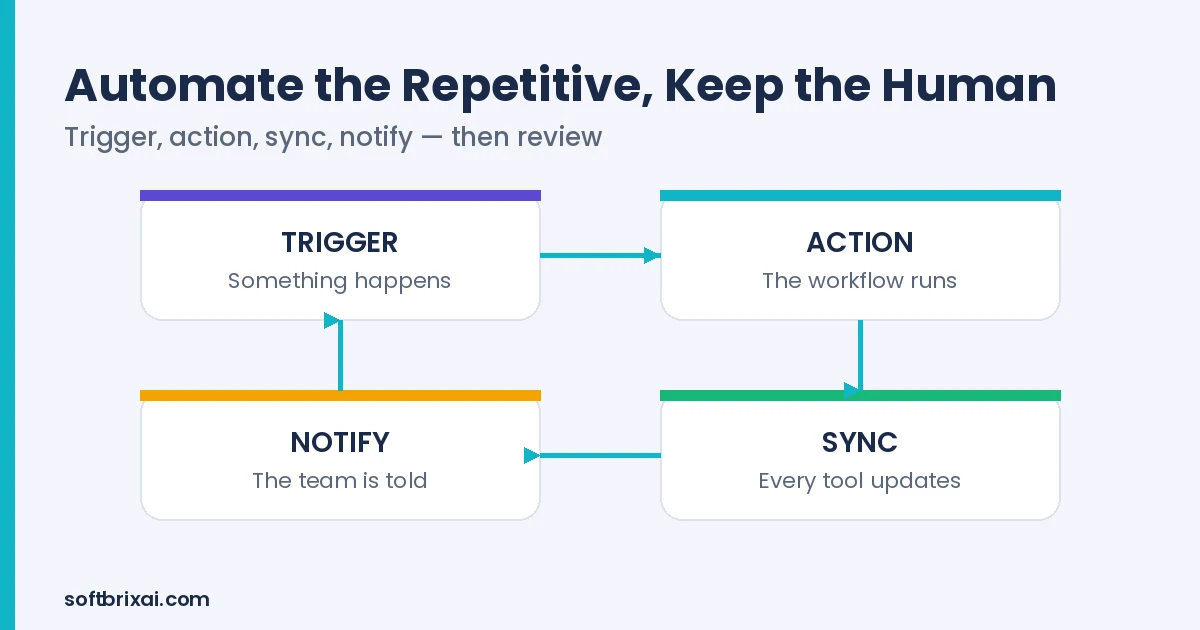
Automation and collaboration tools connect your stack and keep the team aligned. They reduce manual work and keep communication out of cluttered inboxes.
Zapier
Zapier connects apps and automates workflows without code. It is best for startups that use multiple tools and need data to flow between them automatically. Zapier supports thousands of app integrations, making it a flexible bridge when native connections do not exist. The free tier covers basic automations with limited task volume. Paid tiers add more tasks, multi-step workflows, and premium app connections. Zapier works well for simple automations like adding new CRM contacts to a mailing list or creating Slack notifications for new deals. Complex workflows may require Make or custom development. The main cost is task volume: heavy usage pushes you into higher tiers.
Best for: non-technical teams that need two apps talking this week, not next quarter. Watch out: task volume is the bill, so count monthly tasks before automating everything in sight.
Make (formerly Integromat)
Make is a visual automation platform that lets users build complex workflows with a drag-and-drop interface. It is best for startups that need more control than Zapier offers, including conditional logic, loops, and data transformation. Make offers a free tier with limited operations and tiered paid plans based on usage. The visual builder shows each step in a workflow, which makes debugging easier than text-based automation. Make handles multi-step scenarios that would require workarounds in simpler tools. The learning curve is steeper than Zapier, so teams new to automation may start with Zapier and move to Make as needs grow.
Best for: teams whose workflows need branches, filters, and data reshaping. Watch out: visual builders still need logic skills, so document each scenario before it grows.
Notion
Notion is an all-in-one workspace that combines notes, documents, databases, and project boards. It is best for startups that want a single place for planning, documentation, and task tracking. The free tier covers personal use and small teams with limited file uploads. Paid tiers add unlimited file uploads, version history, and admin controls. Notion replaces multiple tools: you can build a wiki, a project tracker, and a CRM-like database in one workspace. The flexibility is both an advantage and a challenge: teams must design their own structure, which takes time. Startups that invest in setting up Notion properly gain a workspace that adapts to their process.
Best for: teams that want docs, plans, and trackers in one searchable home. Watch out: a blank workspace invites sprawl, so start from one template and grow it slowly.
Slack
Slack organizes team communication into channels and connects with other tools. It is best for startups that want to replace email threads with organized, searchable conversations. The free tier covers basic messaging with limited message history and app integrations. Paid tiers add unlimited history, more integrations, and advanced admin features. Slack integrates with most tools in a startup stack, including Google Drive, HubSpot, and Zapier. Channels keep discussions organized by project, team, or topic. The main cost is attention: without clear norms, Slack can become a source of distraction. Set guidelines for channel use and response times.
Best for: teams replacing email threads with searchable channel discussions. Watch out: always-on chat eats focus, so agree on response-time norms in week one.
Marketing, SEO and AI Content Tools
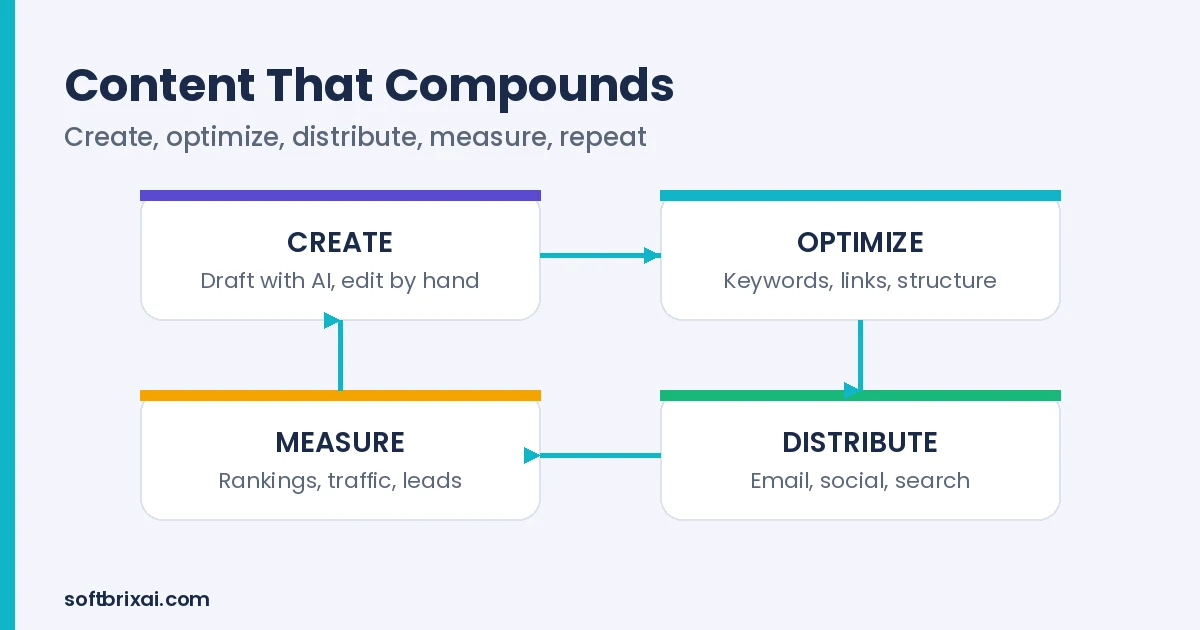
Marketing, SEO, and AI content tools help startups reach audiences, rank in search, and create content efficiently.
Mailchimp
Mailchimp is an email marketing platform for managing audiences and running campaigns. It is best for startups that want a straightforward tool for newsletters, automated sequences, and audience segmentation. The free tier covers basic email campaigns for small lists. Paid tiers add automation, A/B testing, and advanced reporting. Mailchimp integrates with most e-commerce and CRM platforms. The platform works well for startups that need email marketing without the complexity of a full marketing suite. As lists grow, costs rise. Startups with large audiences may find specialized email tools more cost-effective.
Best for: startups whose main channel is email newsletters and simple automation. Watch out: pricing follows list size, so prune unengaged subscribers regularly.
SEMrush
SEMrush is an SEO and competitive research platform. It is best for startups that want to track rankings, analyze competitors, and find keyword opportunities. SEMrush offers limited free features and tiered paid plans based on features and usage limits. The platform provides keyword research, backlink analysis, site audits, and competitor tracking. SEMrush works well for content teams building organic traffic. The data depth is substantial, but the interface can feel overwhelming for beginners. Startups new to SEO may start with simpler tools and move to SEMrush as their needs grow.
Best for: content teams building organic traffic with keyword and competitor data. Watch out: the toolkit is deep, so start with one workflow, like rank tracking, before exploring the rest.
Ahrefs
Ahrefs is an SEO tool focused on backlink analysis and keyword research. It is best for startups that prioritize link building and competitive analysis. Ahrefs does not offer a free tier, but paid plans start at accessible levels for small teams. The platform provides detailed backlink data, rank tracking, and content explorer features. Ahrefs is known for the accuracy of its backlink index. Startups focused on organic growth find the data valuable. The cost may be difficult to justify for very early-stage companies with limited budgets. Consider Ahrefs when SEO becomes a primary growth channel.
Best for: teams whose growth bet is backlinks and competitive content gaps. Watch out: it is a specialist tool, so pair it with a rank-tracking workflow rather than using it alone.
Jasper
Jasper is an AI content platform for creating marketing copy, blog posts, and other written content. It is best for startups that need to produce content quickly without adding headcount. Jasper does not offer a free tier, but paid plans are available at different word limits. The platform provides templates for common content types and lets users set brand voice guidelines. Jasper works well for drafting content that a human editor refines. The output quality varies by prompt and topic, so human review remains essential. Startups that produce high volumes of content may find Jasper efficient. Those with limited content needs may not justify the cost.
Best for: teams that must ship drafts fast and can edit them properly. Watch out: raw AI output still needs a human editor, so never publish straight from the draft.
Finance and Market Intelligence Tools
Finance and market intelligence tools help startups manage cash and understand the competitive landscape.
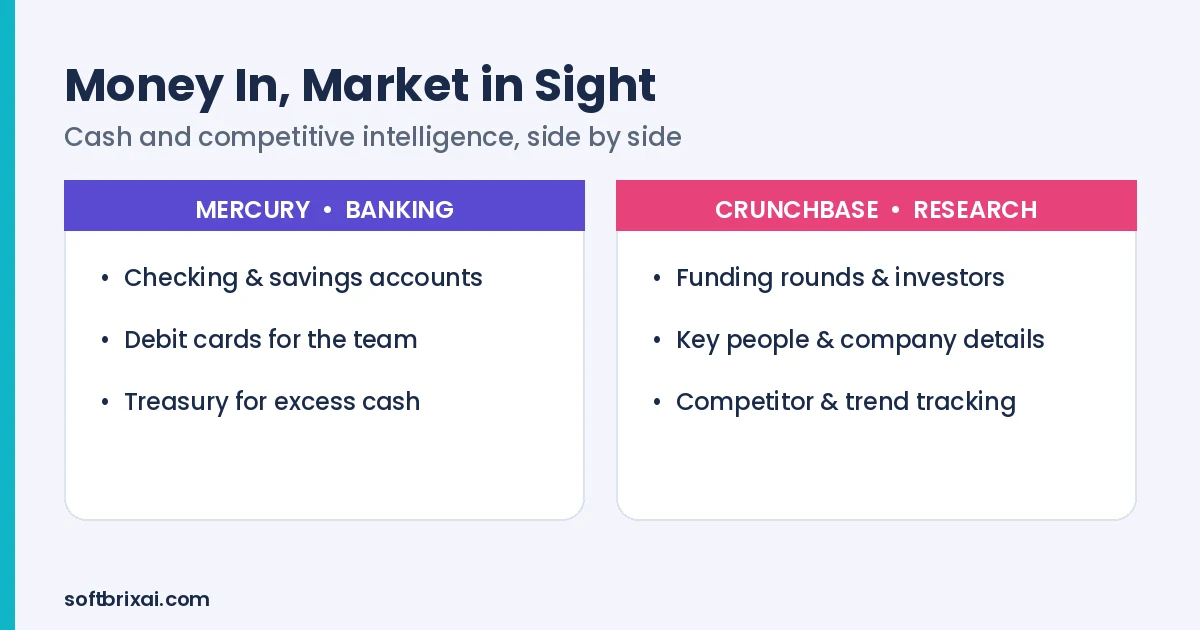
Mercury
Mercury is a banking platform built for startups. It is best for early-stage companies that want a digital banking experience with tools for managing cash flow. Mercury offers free accounts with no monthly fees, though transaction fees may apply. The platform provides checking and savings accounts, debit cards, and integrations with accounting software. Mercury also offers treasury management for startups with excess cash. The main limitation is that Mercury is a financial technology company, not a traditional bank. Funds are held at partner banks. Startups should review the terms and confirm that the setup meets their needs.
Best for: founders who want startup banking without branch visits or monthly fees. Watch out: it is a fintech front end, so confirm where funds sit and what help is available if you need human support.
Crunchbase
Crunchbase is a market intelligence platform for researching companies, investors, and funding rounds. It is best for startups that want to understand competitors, find investors, and track industry trends. Crunchbase offers limited free access and tiered paid plans. The platform provides data on funding history, key people, and company details. Crunchbase works well for fundraising research and competitive analysis. The data is user-contributed and may not always be current. Startups should verify important details through primary sources. The paid tiers are most useful for teams that need regular access to funding data.
Best for: fundraising prep and competitor mapping in one search. Watch out: funding rounds and headcounts can lag, so cross-check anything deal-critical before you rely on it.
Tools That Didn’t Make the Main List (and When to Consider Them)
Several tools serve specific needs that do not fit the main categories. Consider these when your startup faces a particular challenge.
Salesforce Starter Suite provides CRM essentials for teams that expect to scale into the full Salesforce ecosystem. It is worth considering if you plan to grow into enterprise sales and want a platform that scales with you. The Starter Suite covers sales, service, and marketing basics.
Miro offers an infinite online whiteboard for brainstorming, wireframing, and sprint planning. Consider Miro when your team needs visual collaboration that text-based tools cannot provide. It works well for product teams running design sprints or strategy sessions.
ClickUp and Trello are project management tools that handle task tracking and team coordination. ClickUp offers more features and customization; Trello offers simplicity. Consider these when Notion’s flexibility feels like too much structure to design yourself.
Puzzle provides finance and accounting tools for startups. Consider Puzzle when you need real-time visibility into burn rate and runway without building complex spreadsheets.
Carta manages cap tables and equity for startups. Consider Carta when you are preparing for fundraising or managing employee stock options.
Dealroom.co provides market intelligence with a focus on European startups. Consider Dealroom.co if your market includes European companies and you need regional data.
Choosing Your Stack by Startup Stage
The right stack changes as your startup grows. Match tools to your current stage and add complexity only when a real problem demands it.
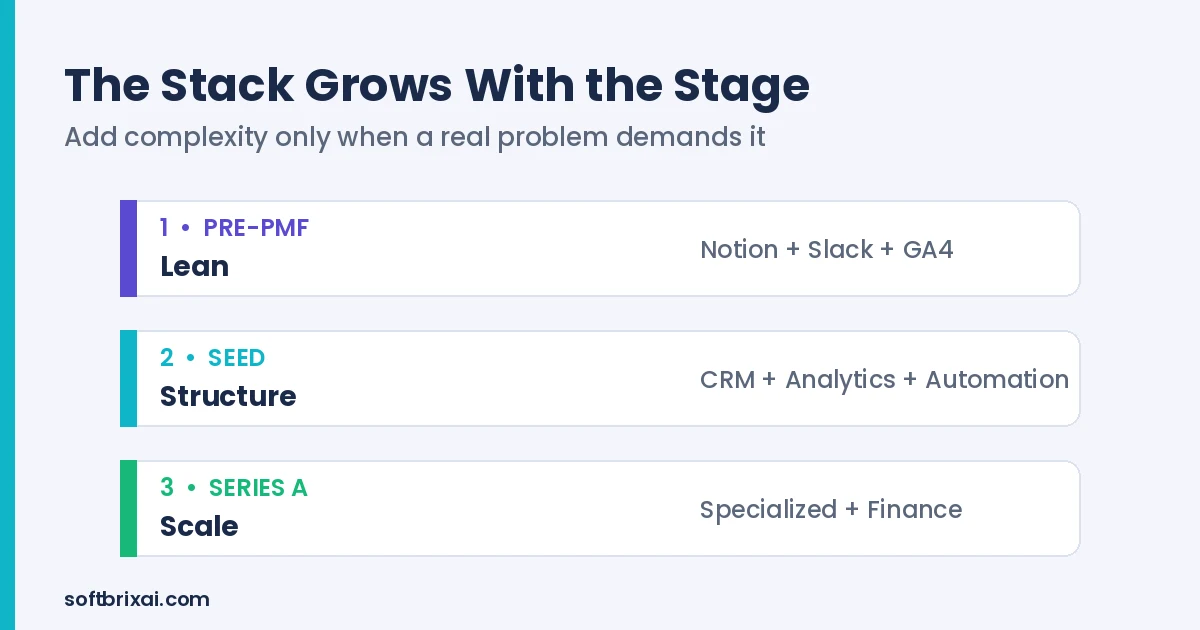
Pre-Product-Market Fit: The Minimum Viable Stack
At the idea and pre-product-market-fit stage, stay lean. You need tools for organizing thinking and talking to early users, not for managing scale. A simple setup of Notion for documents and planning plus Slack for communication covers most needs. Add a free analytics tool like GA4 once you have a landing page.
Resist the urge to buy heavy software before you have proven people want your product. Premature scaling, including over-tooling, is a common reason startups stall. The goal at this stage is learning, not efficiency. Spend time with users, not configuring software.
Seed Stage: Adding Structure Without Bloat
At seed stage, customers are arriving and you need structure. Add a CRM like HubSpot or Attio to manage leads. Add GA4 or Amplitude to understand where customers come from and what they do. Keep the stack small: one tool per job.
This is also when automation becomes useful. Zapier or Make can connect your CRM to your email tool and reduce manual data entry. Add these tools when the manual work becomes a bottleneck, not before. The goal is to add structure without creating complexity that slows the team.
Series A and Beyond: Scaling What Works
At Series A and beyond, you have repeatable revenue and need tools that scale. Add marketing automation, deeper product analytics, and workflow automation. Finance tools become essential for tracking burn rate and runway.
This is when specialized tools may outperform suites. Amplitude provides deeper product insights than GA4. Make handles complex automations that Zapier cannot. The stack grows, but the principle stays the same: each tool solves a specific problem and connects to the rest.
Mistakes That Quietly Drain Your Startup Software Budget
Five mistakes turn helpful tools into wasted spend. Avoiding them keeps your stack lean and useful.
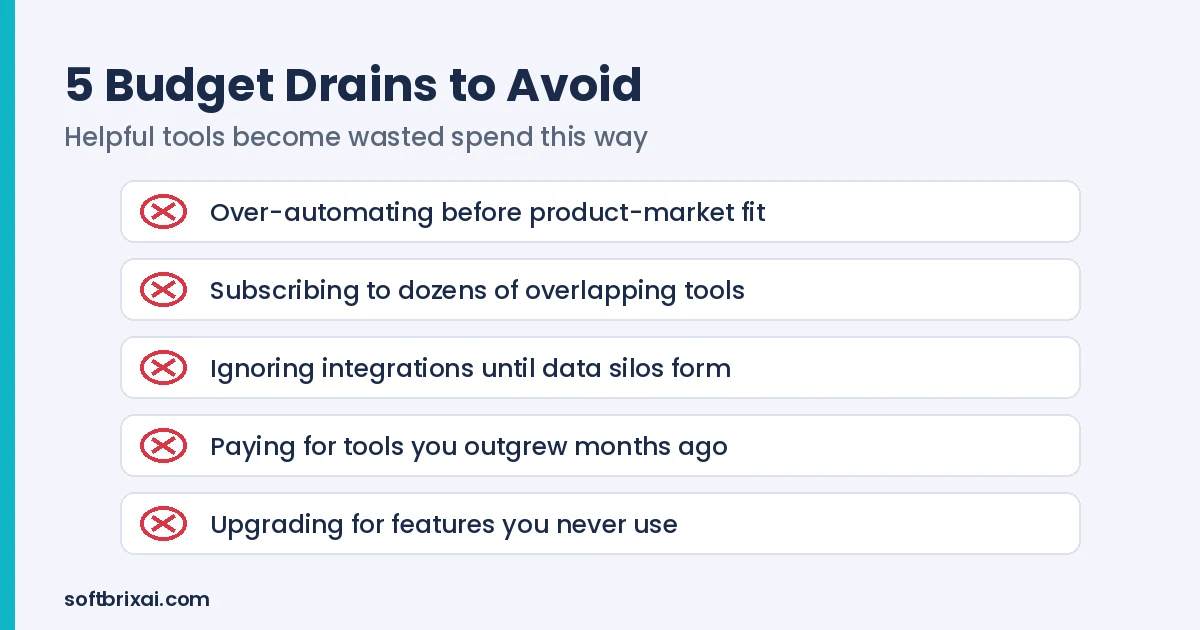
Over-automating too early is the first mistake. Before product-market fit, you should be talking to users, not building complex systems. Automation adds value when you have repeatable processes, not before.
Tool overload is the second mistake. Subscribing to dozens of overlapping SaaS products creates cost and confusion. Each tool requires setup, maintenance, and attention. Fewer tools used well beat many tools used poorly.
Ignoring integrations is the third mistake. Tools that cannot talk to each other create data silos and double work. Check integration options before you commit.
Forgetting to revisit the stack is the fourth mistake. Founders often pay for tools they outgrew months ago. Review subscriptions every quarter and cut what no longer earns its place.
Paying for features you do not use is the fifth mistake. Upgrade only when a real limit forces the change. If your free tier covers your needs, stay on it.
How to Measure ROI From Your Growth Stack
Measure ROI by tracking whether each tool saves time or improves a number that matters. Start with the metrics each tool should affect. A CRM should improve conversion rates or reduce sales cycle length. An analytics tool should lead to better decisions, measured by changes in key metrics. An automation tool should reduce hours spent on manual tasks.
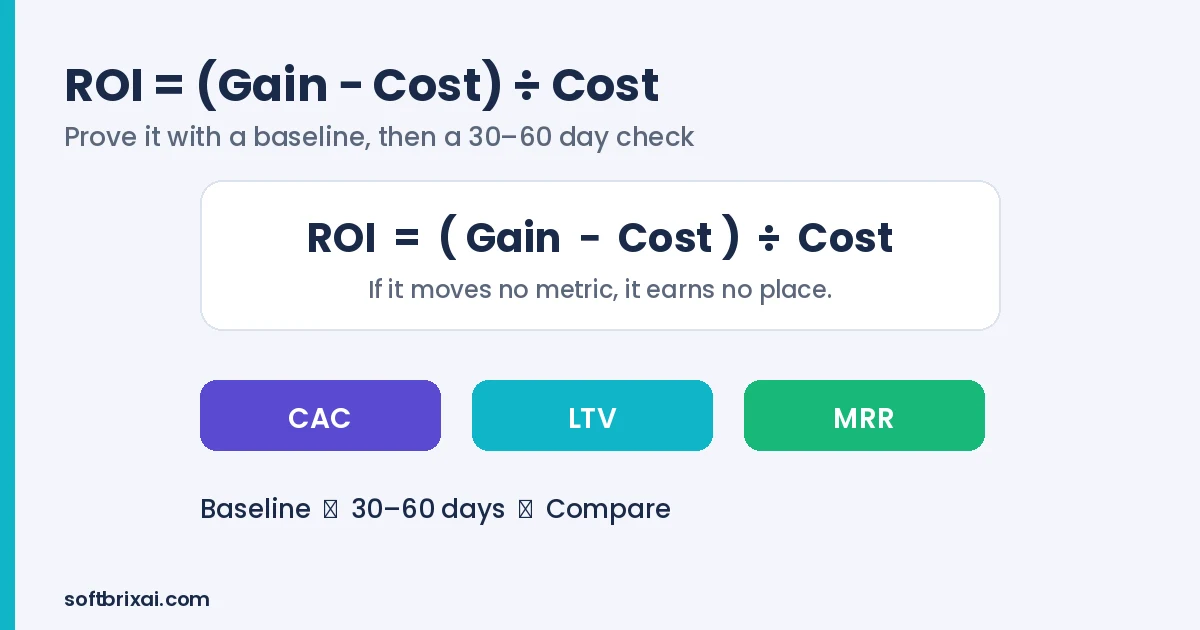
Set a baseline before you add a tool. Record the current conversion rate, time spent on a task, or cost per acquisition. After 30 to 60 days, compare the new numbers to the baseline. If the tool does not move a metric, question whether it earns its place.
Track software spend as a percentage of operating budget. Set a ceiling for that share in advance, and flag any tool that pushes spend past it without moving a metric. Calculate the cost per user and compare it to the value the tool provides. A tool that costs more than the time it saves is a candidate for removal.
Startup Growth Tool Trends to Watch in 2026
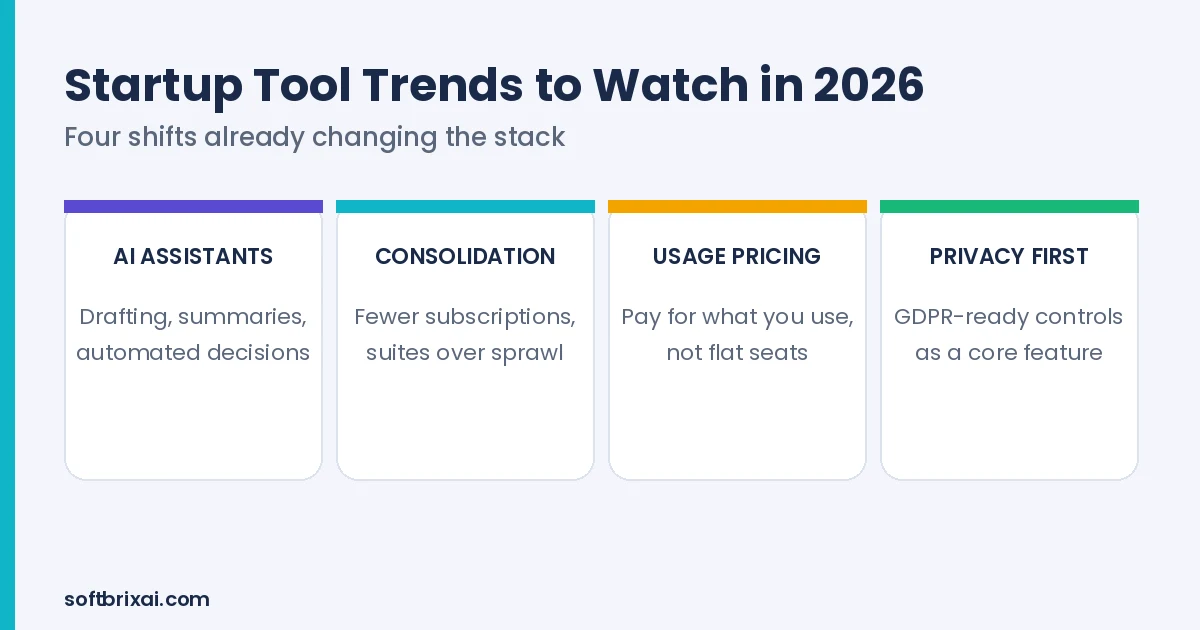
AI is reshaping startup tools. Platforms now embed AI assistants that draft content, summarize data, and automate decisions. HubSpot, Notion, and Salesforce all offer AI features that reduce manual work. Expect more tools to add AI capabilities that handle routine tasks.
Consolidation is another trend. Startups tired of managing many subscriptions are moving toward suites that cover multiple functions. All-in-one platforms reduce integration work and simplify billing. The trade-off is depth: suites may not match specialized tools in every area.
Usage-based pricing is growing. Instead of flat monthly fees, more tools charge based on usage. This model can reduce costs for early-stage startups with low volume. It also creates unpredictability as usage grows.
Privacy and security remain priorities. Regulations like GDPR and growing awareness of data rights push vendors to offer stronger controls. Startups should prioritize tools that treat security as a core feature.
Final Thoughts
Growth navigate startup tools give small teams the power to compete with larger companies. The winners are not the founders with the most apps. They are the ones who match the right tool to a real problem, add tools in step with their stage, keep everything connected, and cut what they no longer need.
Build your stack as a system, not a shopping list. Start with free tiers. Add tools when a bottleneck forces the change. Measure whether each tool earns its place. Review the stack quarterly. These habits turn software from a monthly expense into a genuine growth engine.
The best growth navigate startup tools are the ones your team actually uses. Simplicity beats feature count. Connection beats isolation. Discipline beats impulse. Build accordingly.
Frequently Asked Questions
What are growth navigate startup tools?
Growth navigate startup tools are software platforms that help early-stage companies manage and accelerate growth. They cover CRM, analytics, automation, collaboration, finance, and market intelligence. The goal is a connected, affordable stack that removes friction and supports decisions with real data. These tools replace spreadsheets and manual tracking with systems that collect live data and automate repetitive work.
Which startup tools should I start with?
Start with a workspace like Notion for planning and Slack for communication. Add a free CRM like HubSpot once leads arrive. Add GA4 to track website behavior. Keep the stack small: one tool per job. Add automation and specialized analytics only when a real bottleneck forces the change. Resist buying tools before you have proven people want your product.
How many tools does a startup actually need?
Most early-stage startups need three to five tools. A workspace for documents and planning, a communication tool, a CRM, and an analytics platform cover the essentials. Add automation, marketing, and finance tools as you grow. Fewer tools used well beat many tools used poorly. Each tool should solve a specific problem and connect to the rest of your stack.
Are free tiers enough for an early-stage startup?
Yes, free tiers are enough for most early-stage startups. HubSpot, Notion, Slack, GA4, and Zapier all offer free plans that cover basic needs. Upgrade to paid plans only when you hit a real limit, such as contact caps, message history limits, or feature gates. Free tiers let you test tools before committing budget.
How much should a startup spend on software?
Early-stage startups typically spend 10 to 20 percent of their operating budget on software. Anything beyond that range deserves scrutiny. Track spend per tool and compare it to the value the tool provides. A tool that costs more than the time it saves is a candidate for removal. Review subscriptions quarterly to catch unused tools.
Should I pick an all-in-one suite or specialized tools?
Choose an all-in-one suite if you want simplicity and reduced integration work. Suites like HubSpot combine CRM, marketing, and sales in one platform. Choose specialized tools if you need depth in a specific area, such as Amplitude for product analytics. Many startups use a hybrid approach: a suite for core functions and specialized tools where depth matters.
When should I switch from free to paid plans?
Switch to paid plans when you hit a real limit that blocks your work. If your free CRM cannot handle your lead volume, upgrade. If your free analytics cannot track the events you need, upgrade. Do not upgrade for features you might use someday. Pay for what solves a current problem, not what looks impressive in a demo.
How do I avoid tool fatigue in my team?
Avoid tool fatigue by keeping the stack small and connected. Each tool should have a clear purpose and an owner. Set norms for how and when to use each tool. Integrate tools so data flows automatically. Review the stack quarterly and cut what no longer serves a purpose. Fewer tools used well beat many tools that confuse the team.
Can I migrate my data if I pick the wrong tool?
Yes, most platforms let you export your data. Check export options before you commit. Some tools make migration easier than others. Look for platforms that offer standard formats like CSV and API access. Migration takes time and planning, so choose carefully upfront. If you outgrow a tool, plan the migration before canceling the old subscription.
How often should a startup review its tool stack?
Review your tool stack every quarter. Check whether each tool still solves a real problem. Look for unused subscriptions, overlapping features, and tools that no longer integrate with your current stack. Cut what does not earn its place. Quarterly reviews prevent budget creep and keep the stack aligned with your current stage and needs.