
The Xbox Series X price increase has flipped a rule that held for decades. Consoles are supposed to get cheaper as they age, yet the Series X launched at $499.99 in November 2020 and now costs $799.99 for the model with a disc drive, after three separate hikes in a little over a year.
The cause sits far outside gaming. Microsoft blames the soaring cost of memory and storage, the very parts that AI data centers now buy in enormous quantities. This article walks through every price change in order, explains the shortage underneath them, and helps you judge whether buying today makes sense.
The Full Xbox Series X Price Timeline
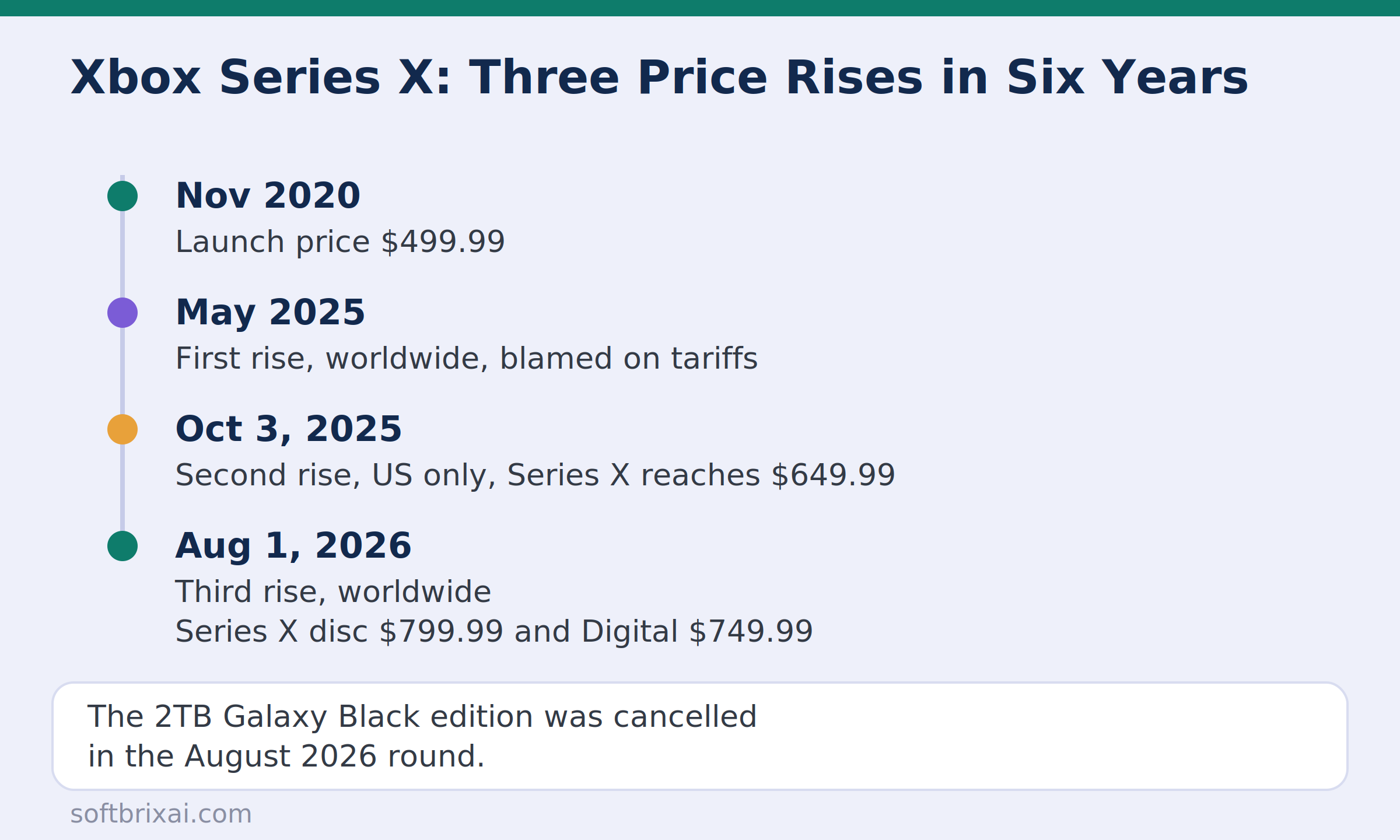
The Series X kept its launch price for more than four years, which made what followed feel abrupt. Between May 2025 and August 2026, Microsoft raised the price three times. One round covered the whole world, one hit only the United States, and the last one landed everywhere again with the biggest jumps of all.
| Date | What changed | Series X price after |
|---|---|---|
| November 2020 | Launch of the Xbox Series X | $499.99 |
| May 2025 | First price hike, applied worldwide and widely attributed to tariffs | Rose in every market |
| October 3, 2025 | Second hike, US only, adding $20 to $70 across the range | $649.99 for the standard Series X |
| August 1, 2026 | Third hike, worldwide; 512GB models up $100, 1TB models up $150, and the 2TB Galaxy Black model cancelled | $799.99 for the 1TB model with disc drive, $749.99 for the 1TB Digital model |
By October 2026 the result was hard to miss in stores. Engadget reported that the Series X sold for between about $725 and $900 depending on the model and storage, which works out to roughly a 60 percent increase over the launch price of the same hardware generation.
Why Did Microsoft Raise the Price Three Times?
Microsoft gave a different public reason at each step, and the reasons grew more specific as the increases grew larger. The company never tied the May 2025 worldwide hike to one clear cause, and outside observers widely attributed it to tariffs on imported hardware. For the October 2025 round, which applied only in the United States, Microsoft cited “changes in the macroeconomic environment” and left the phrase to do the explaining.
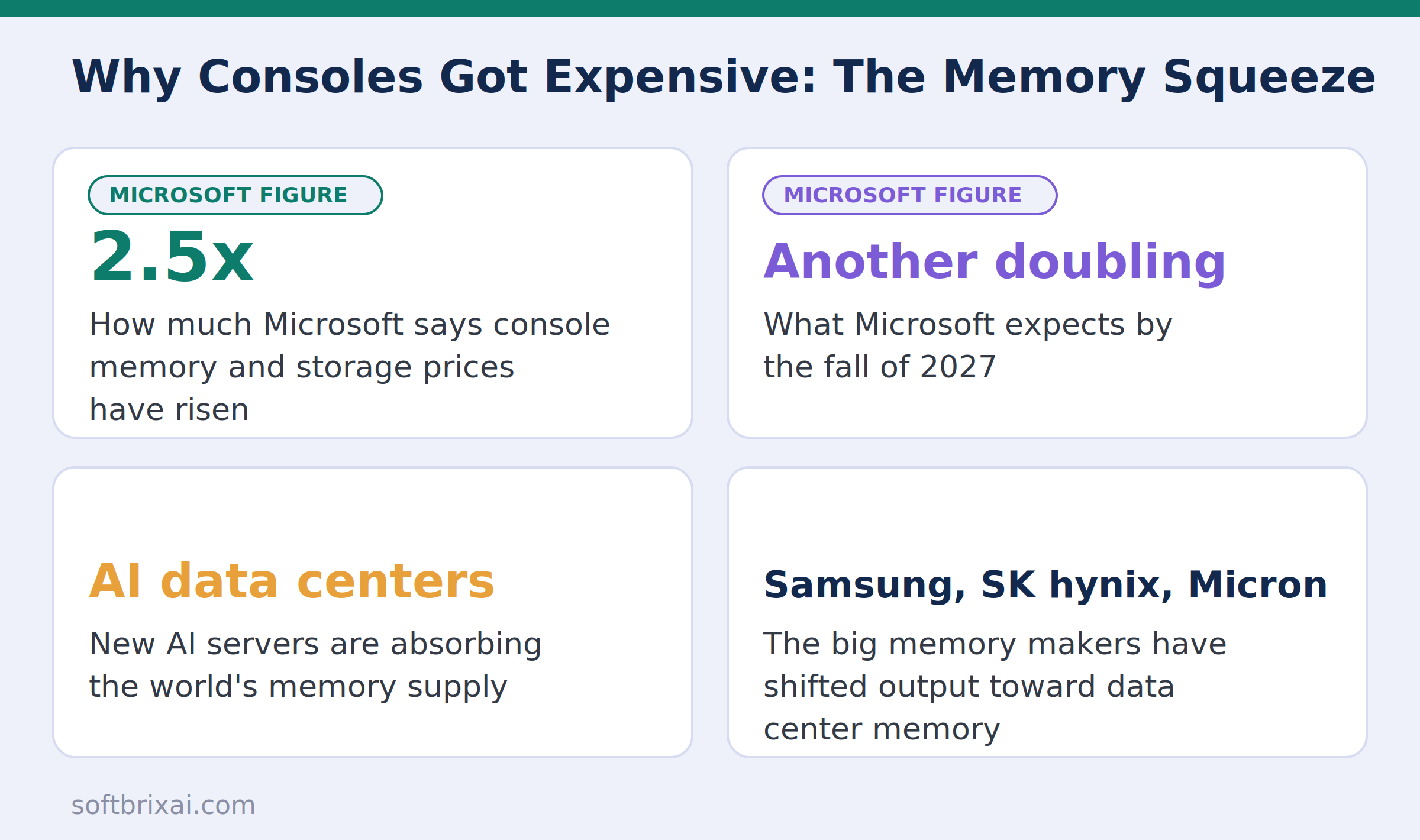
The third hike came with numbers attached. Notebookcheck covered the August 2026 announcement in detail, including Microsoft’s warning that console storage and memory prices had “increased by more than 2.5x”. Microsoft also said it expects “another doubling by the fall of 2027”. Both figures are the company’s own claims, stated as its justification for raising prices again, and they point in one direction only.
One more piece of context matters here. Microsoft itself notes that consoles are typically sold for less than they cost to make, with the loss covered by game sales and subscriptions over the life of the machine. That model survives small swings in parts pricing. It does not survive the main components more than doubling in cost, because the subsidy on every box sold grows with them. Once memory and storage became the expensive parts of the build, the sticker price had to follow.
The Real Cause: AI Data Centers Are Eating the Memory Supply
Strip a console down and it is a small computer: a processor, a block of fast memory, and solid state storage. Those are the same ingredients that AI data centers consume by the warehouse. Every new facility built to train and run AI models needs memory and storage at a scale the consumer market never demanded, and the factories that make those parts can only produce so much each year.
The supply response made things worse for everyone else. Samsung, SK hynix and Micron, the three giants of memory production, shifted capacity toward the data center orders that pay best, and the consumer side of the market was left with a shrinking share of output. The result is a genuine shortage of the memory and storage that consoles, laptops and phones all compete for, and prices have climbed across every category that uses them.
This is the same crunch that pushed PC memory kits to record prices and set off the argument we covered in our explainer on the Sam Altman RAM debate, where the head of OpenAI argued that scarce memory does more good inside data centers than inside home machines. Whatever side of that debate you take, the console aisle is where ordinary buyers now feel it. Microsoft is not raising prices in a vacuum. It is bidding for the same chips as the AI industry, and passing the outcome on to players.
It Is Not Just Xbox: Every Console Costs More
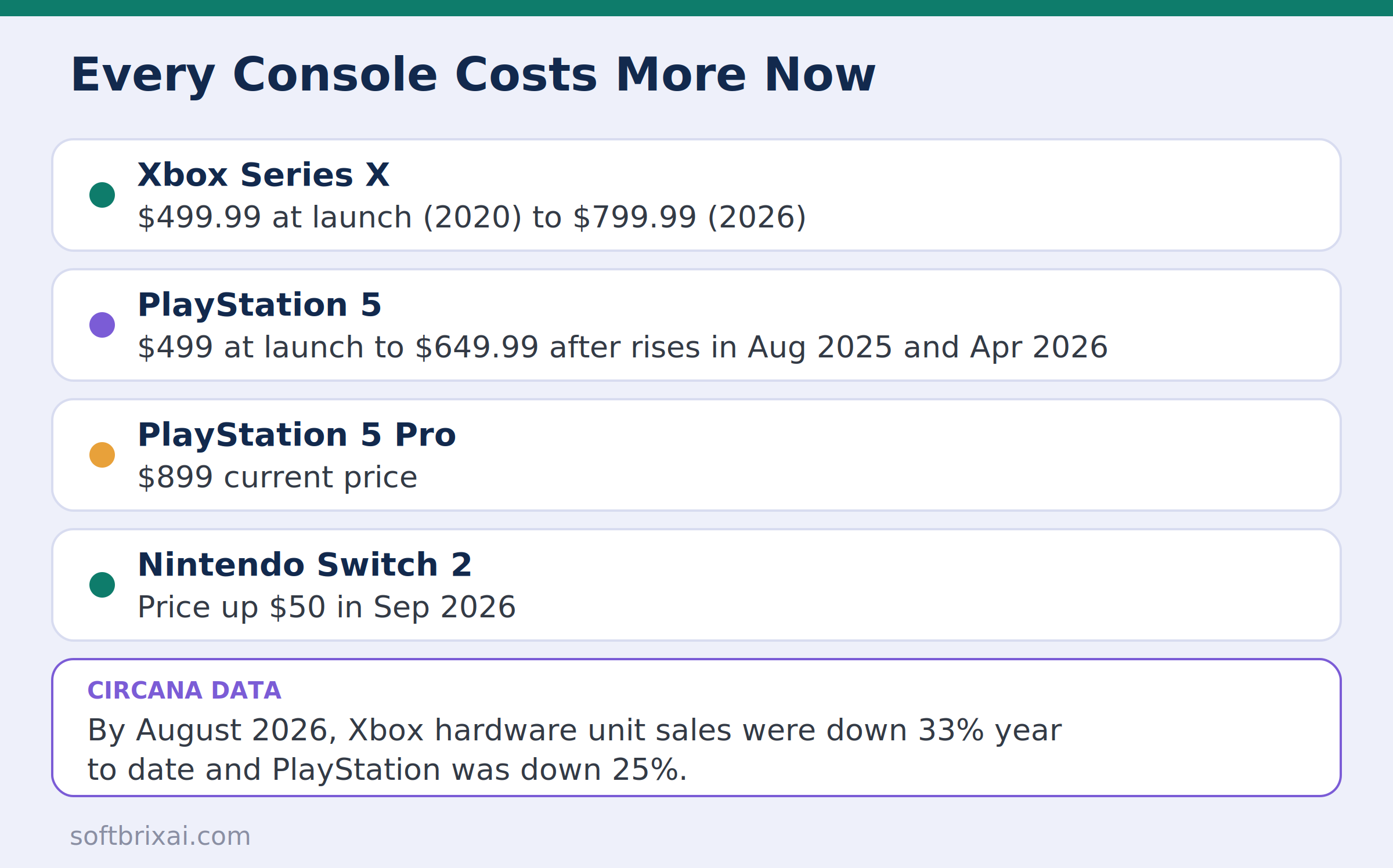
Sony and Nintendo sell different machines, but they shop at the same memory factories, and their prices tell the same story. The base PlayStation 5 launched at $499, moved to $549.99 in August 2025, and then took another $100 increase in April 2026. The PS5 Pro, Sony’s premium model, now carries a list price of $899. Nintendo joined in later, adding a $50 increase to the Switch 2 in September 2026.
Read together, the pattern is clear. No console maker found a way to absorb the new cost of memory and storage, and none chose to shrink the hardware instead. Each company protected its margins at a different speed, but all three arrived at the same place: the current generation of consoles costs more in its sixth year than it did at launch, something that has no real precedent in the history of the industry.
Sales Are Falling as Prices Climb
Higher prices are changing what shoppers do. Circana tracks retail sales in the United States, and Polygon reported its figures for the year to date through August 2026. Xbox hardware unit sales fell 33 percent compared with the same period in 2025, while PlayStation hardware units fell 25 percent. The declines hit both brands, which again points at the shared cause rather than at any one console.
The money side of the data is just as striking. The average price paid for a new Xbox reached $529, up 26 percent year over year and an all time high for the United States. The average PlayStation buyer paid $597, up 20 percent. In other words, far fewer consoles are leaving stores, and the people who still buy one pay record amounts for the privilege. Price rises can protect revenue per unit for a while, but a shrinking base of new owners means fewer people buying games and subscriptions later.
Game Pass Costs More Too
The hardware is only half of the Xbox bill. Game Pass Ultimate, the subscription at the center of the platform’s value pitch, has been on its own upward climb. It cost $19.99 a month in July 2024, jumped to $29.99 in October 2025, and then came back down to $22.99 after a strong backlash from subscribers.
That partial retreat is worth noticing. It shows Microsoft testing the ceiling of what players will accept, and finding it lower than the company hoped on the subscription side. No similar retreat has happened on hardware, because a console price reflects a bill for parts that Microsoft has already paid. A subscription price can move with a press release. A memory contract cannot.
Should You Buy an Xbox Series X Now or Wait?
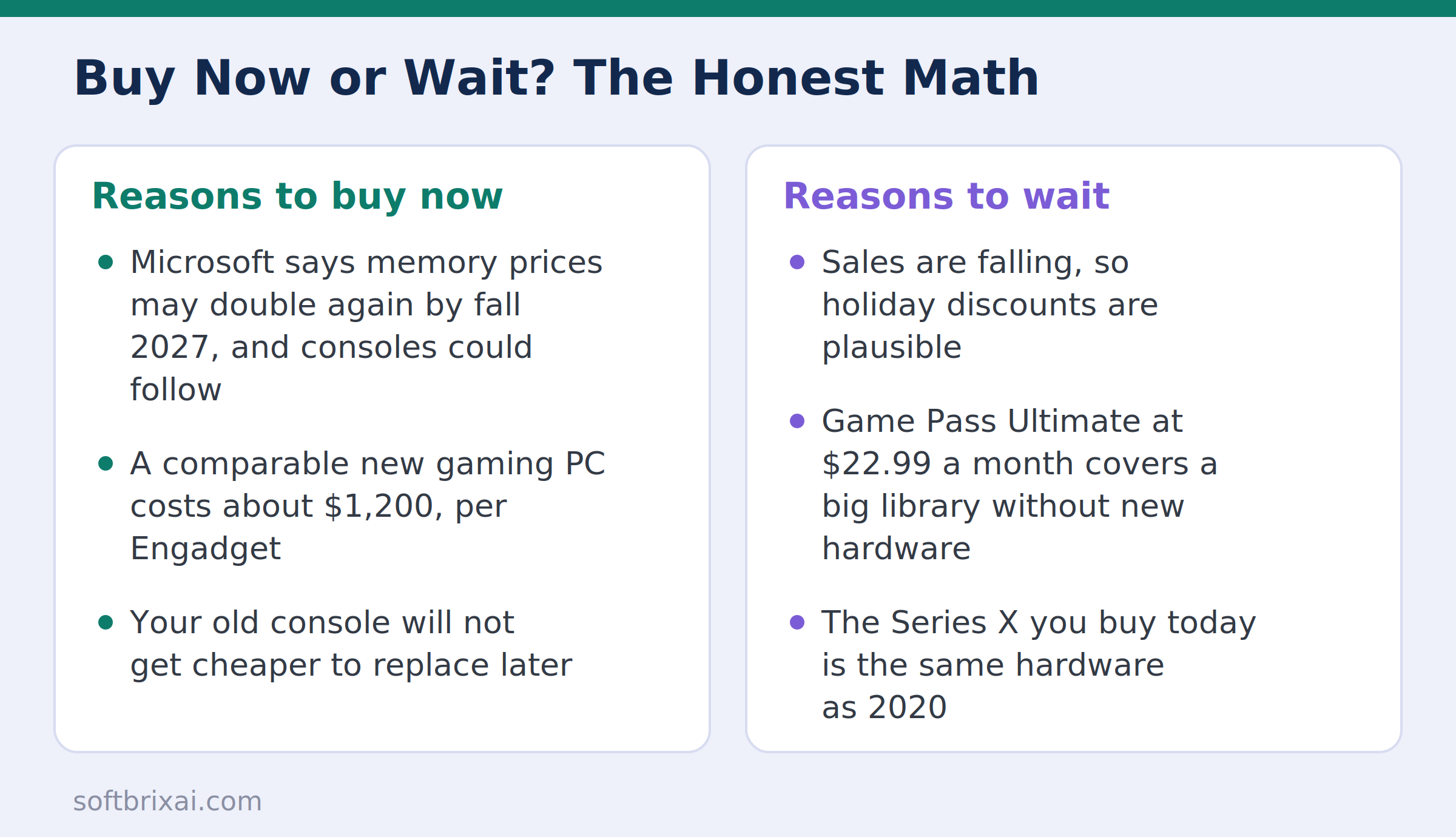
The honest answer depends on what you are waiting for. If you are holding out for an official price cut, Microsoft’s own words argue against you. The company says memory and storage costs have already risen by more than 2.5 times and that it expects another doubling by the fall of 2027. Manufacturers do not cut prices while forecasting that their most expensive inputs will double again. On the evidence available, $799.99 looks more like a waypoint than a peak.
There are still softer ways in. Retailers can discount, bundle games or controllers, or clear stock on their own schedules even when the list price stays fixed, so a shopper who watches sales pays less than one who buys on a random Tuesday. The used market matters more than it used to as well, because millions of Series X consoles were sold at $499.99 and $649.99 and now circulate second hand. A careful used purchase, with the storage size checked and the disc drive tested, gets you the same machine the early buyers bought, at something closer to their price.
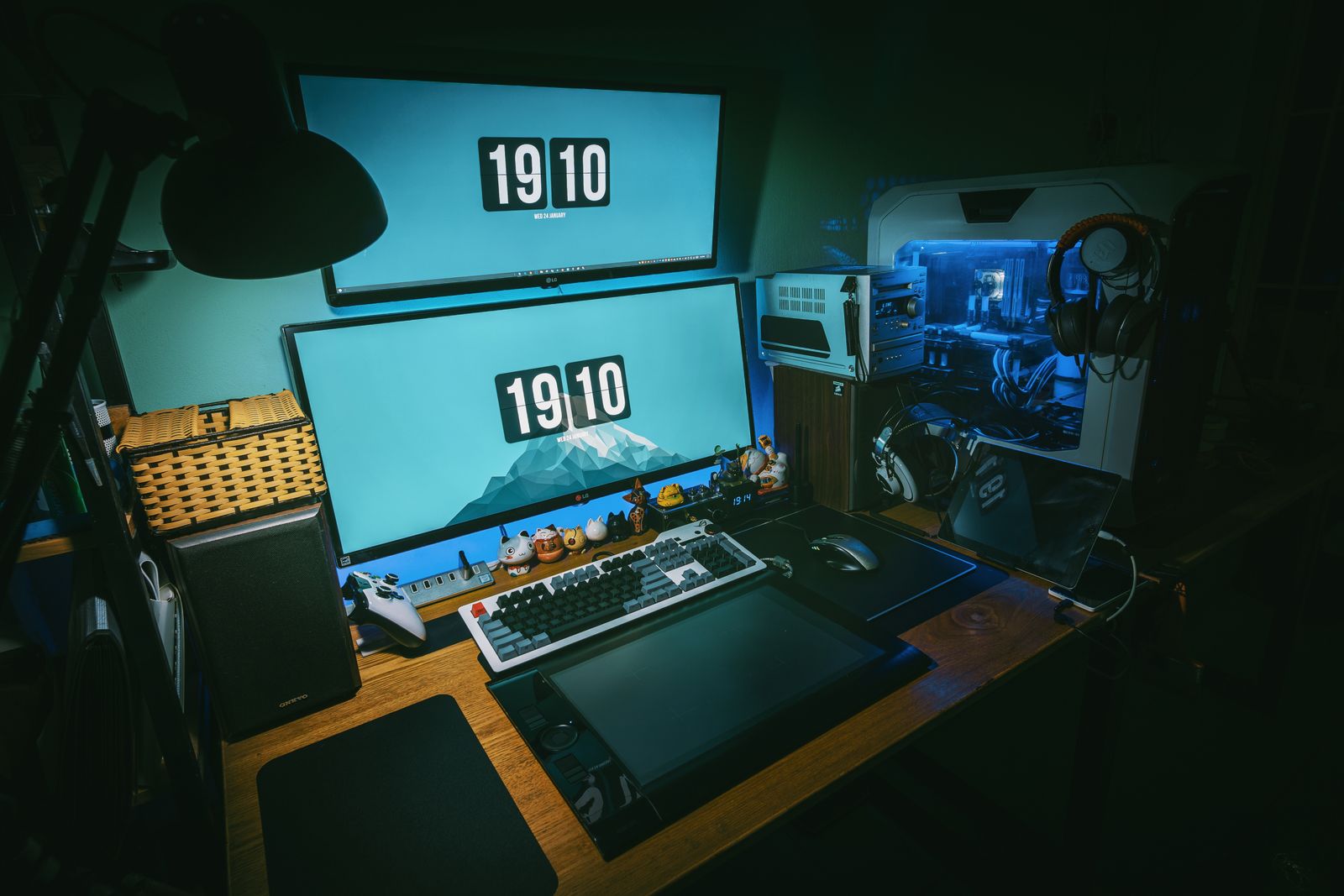
The other comparison shoppers now run is against a PC. Engadget found that a gaming PC of comparable power, built from new parts, costs roughly $1,200 including Windows and a controller. The console still wins on upfront price, and it asks nothing of you but a television. But the gap that once made the choice automatic has narrowed from hundreds of dollars of daylight to a few hundred dollars of tradeoffs, and the PC side brings a larger game library, free online play and parts you can upgrade one at a time. If you play most days and plan to keep the machine for years, buying the Series X now at a bundled or used price is defensible. If you play lightly, waiting costs you nothing but time, and the one thing waiting will not reliably buy you is a lower list price.
What Rising Console Prices Mean Beyond Gaming
A console is simply the most visible product built from memory and storage. The same market sets the price of the laptop on a desk, the phone in a pocket and the servers a business rents by the hour. When the world’s memory output gets bid up by AI infrastructure, the increase surfaces everywhere at once: in a game console, in a workstation quote, and in the hardware budget behind the production AI systems companies now run. The Xbox price tag is the version of this story that fits on a store shelf, which is why it is worth reading as an economic signal and not just a gaming headline.
Conclusion
The Xbox Series X price increase is what happens when a $499 entertainment product collides with the most expensive industrial buildout of the decade. Three hikes took the console to $799.99, Sony and Nintendo followed with increases of their own, unit sales fell by a quarter to a third, and even the Game Pass subscription climbed before settling partway back. Microsoft’s own forecast says the pressure continues into 2027. Players cannot change the memory market, but they can read it clearly: buy at a discount or used price if you want in now, and do not count on the list price coming back down.
Frequently Asked Questions
How much does the Xbox Series X cost now?
The Xbox Series X 1TB model with a disc drive costs $799.99, and the 1TB Digital model costs $749.99. Engadget reported in October 2026 that Series X prices ranged from about $725 to $900 depending on the model and storage.
Why did the Xbox Series X price increase?
Microsoft raised the price three times because the parts inside the console keep getting more expensive. The company said console storage and memory prices have increased by more than 2.5 times, driven by AI data centers buying up the world’s memory supply, and tariffs played a role in the first worldwide hike in May 2025.
Will Xbox Series X prices go down in 2027?
A price cut looks unlikely. Microsoft said it expects memory and storage costs to double again by the fall of 2027, which points to flat or higher prices rather than discounts. Retail sales and bundles may soften the cost, but the official list price has moved in only one direction since 2025.
Sources and credits: Price history and Microsoft statements are drawn from Microsoft’s pricing announcements as covered by Notebookcheck. Sales figures come from Circana retail data as reported by Polygon. Current street prices and the gaming PC comparison come from Engadget reporting in October 2026. The infographics in this article are original works created for SoftBrixAI.
Image credits: Dark controller photo by Sam A via Pexels (pexels.com/photo/14205160). White controller photo by Connor Scott McManus via Pexels (pexels.com/photo/11889662). Gaming PC setup photo by FOX via Pexels (pexels.com/photo/1038916). All photos are used under the Pexels License, which allows free use; credit is given voluntarily.